

Sono in partenza per Trento sei studenti della classe 4^C dell’Istituto d’Istruzione Superiore “Nicola Pellati” di Nizza Monferrato (Asti), vincitori della selezione tutta italiana, targata Istituto Nazionale di Fisica Nucleare (INFN), della competizione del CERN “Beamline for Schools” (BL4S). Venerdì 23 e sabato 24 febbraio gli studenti piemontesi saranno al centro trentino di protonterapia dell’Azienda Provinciale Servizi Sanitari (APSS). Nel centro, dove vengono trattati pazienti oncologici con protoni, gli studenti lavoreranno nella sala sperimentale del TIFPA (Trento Institute for Fundamental Physics and Applications, il centro INFN di Trento), dove avranno la possibilità di mettere in pratica l’esperimento che hanno progettato per il concorso internazionale BL4S.
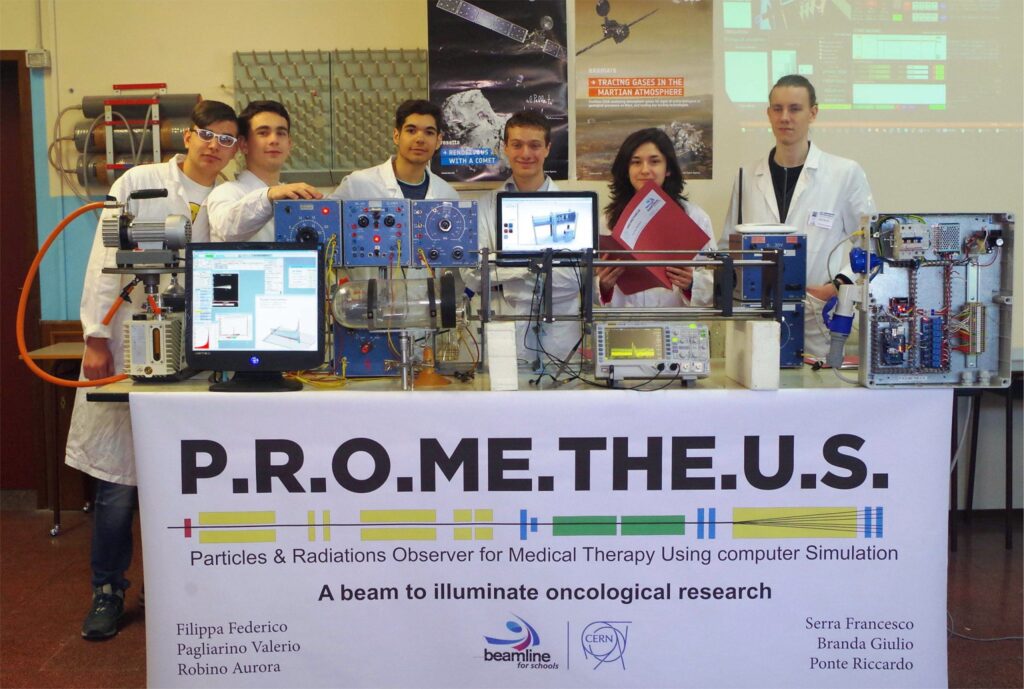
Il servizio presentato su RAI Tre, visionabile anche al seguente link. Il loro esperimento consiste in un’inedita misura del cosiddetto “picco di Bragg”, che identifica il punto di massima deposizione di energia in un trattamento di radioterapia oncologico con fasci di protoni. I protoni prodotti da un acceleratore hanno la proprietà di danneggiare i tessuti umani in maniera più limitata rispetto alla tradizionale radioterapia a raggi gamma: la loro capacità di distruggere cellule è inizialmente piccola, mentre la particella attraversa il tessuto, ma cresce bruscamente nel piccolo tratto finale del loro percorso nei tessuti, punto che prende il nome di “picco di Bragg”. Un’accurata caratterizzazione della posizione di questo picco è condizione necessaria per colpire il tumore e non il tessuto sano che lo circonda, rendendo possibile la cura del tumore. L’esperimento ideato dai ragazzi di Asti si compone di una parte puramente sperimentale che coinvolge la realizzazione del rivelatore, resa possibile grazie alla CAEN, che ha fornito gratuitamente agli studenti delle apparecchiature elettroniche necessarie alla misura, e grazie all’interessamento di alcuni ricercatori dell’Università degli Studi dell’Insubria, co-progettisti di queste stesse apparecchiature. Gran parte dei test durante questa fase si sono svolti nei laboratori di Como dell’Università dell’Insubria. Vi è poi la parte di irraggiamento e analisi dati e validazione delle simulazioni, che verrà messa in pratica al TIFPA venerdì e sabato prossimi. La costruzione del rivelatore e lo sviluppo delle simulazioni è avvenuto nel contesto dell’Alternanza Scuola-Lavoro. Ogni studente ha utilizzato i suoi interessi specifici nei diversi ambiti coinvolti nell’esperimento, dallo studio biomedico sulle applicazioni del picco di Bragg alla realizzazione dell’hardware e del software. A partire da venerdì alle ore 16, i giovani verranno premiati per i loro sforzi progettuali potendo installare e utilizzare il loro apparato nella sala dedicata agli esperimenti dell’acceleratore del TIFPA. Lo studio dei ragazzi potrebbe trovare molteplici applicazioni in campo tecnologico e biomedico, in particolare per migliorare la precisione dei trattamenti radioterapici pediatrici, dove la precisione gioca un ruolo fondamentale.
“Il picco di Bragg è un fenomeno molto studiato e ben conosciuto dalla comunità scientifica”, commentano i ricercatori dell’INFN Dario Menasce (sezione di Milano Bicocca) e Nadia Pastrone (sezione di Torino) e Massimo Caccia dell’Università dell’Insubria, che hanno supportato i ragazzi durante la fase di costruzione del rivelatore. “I ragazzi hanno approcciato questa misura in maniera originale, usando i SiPM (fotomoltiplicatori al silicio), rivelatori modernissimi e ancora poco utilizzati, per caratterizzare con precisione il fenomeno e, nello stesso tempo, mostrare che un esercizio complesso come la misura a un fascio di protoni sia affrontabile con successo da ragazzi di liceo. Le prospettive di completa riuscita dell’esperimento, viste le prove effettuate in laboratorio, sono ottime, ma anche solo il fatto di aver saputo approntare tutte le complesse parti dell’esperimento costituirà un eccellente esempio di attività scientifica affrontata con serietà e professionalità”, concludono i ricercatori.
“L’esperimento proposto dagli studenti è stato accettato con grande entusiasmo dal Program Advisory Committee (PAC), non solo per il suo valore didattico, ma anche per quello scientifico”, ha dichiarato il Presidente del PAC Francesco Tommasino dell’Università di Trento e TIFPA. “La facility del TIFPA ha ospitato oltre 20 gruppi sperimentali nel 2017 per esperimenti in diversi settori, dalla fisica medica all’elettronica, ma questo è il primo esperimento didattico”. “Ho una grandissima passione per la fisica, sia perché è il massimo strumento di indagine della natura, sia perché è la madre di tutte le applicazioni tecnologiche” commenta Valerio Pagliarino, un ragazzo che con i suoi 16 anni si è già fatto notare in vari ambiti scientifici, vincendo ad esempio il primo premio del concorso 2016 per giovani ricercatori dell’Unione Europea.
“Il mio più grande sogno per il futuro è proprio quello di continuare su questa strada e per me questo esperimento sarà un’esperienza indimenticabile. La preparazione è durata circa un anno ed è stato veramente divertente e soddisfacente lavorare tutti insieme per questo obiettivo”, conclude Valerio. Aurora Robino, compagna di Valerio in questa avventura scientifica, commenta così l’esperienza dell’ultimo anno: “Ho preso parte a questo progetto perché mi sembrava un’ottima possibilità per mettere alla prova le mie capacità nell’ambito che più mi appassiona, cioè quello delle scienze naturali. All’interno della squadra mi sono occupata di studiare come le misure ‘acqua-equivalenti’ del picco di Bragg siano utili per la calibrazione della protonterapia. Durante l’esperimento il mio compito sarà quello di operare sul database che raccoglie tutte le operazioni che vengono effettuate. Quello che nel progetto mi è piaciuto di più è stato il lavoro di gruppo e la possibilità di poter approfondire in maniera più mirata la biologia nel campo della radioterapia oncologica”.
Che cos’è la competizione “Beamline for Schools”: Nata nel 2014, la competizione internazionale “Beamline for Schools” ? BL4S (“Una linea di fascio per le scuole”) offre agli studenti dei licei di tutto il mondo la possibilità di vincere un soggiorno al CERN e la possibilità di utilizzare un fascio di particelle di uno degli acceleratori per condurre l’esperimento da loro ideato. I vincitori (al massimo due squadre) vengono annunciati ogni anno a giugno e si recano al CERN a settembre. Da tre anni l’INFN ha deciso di premiare una squadra italiana (ove possibile) tra quelle partecipanti alla BL4S, offrendole la possibilità di condurre il proprio esperimento in uno dei laboratori italiani.
Per informazioni sulla competizione del CERN: http://beamline-for-schools.web.cern.ch/
Informazioni su CAEN S.p.A: La CAEN S.p.A. (www.caen.it), nata come spin-off dell’INFN alla fine degli anni ’70, si è dedicata negli ultimi dieci anni a progetti tecnologici per più importanti centri di ricerca del mondo, oltre allo sviluppo di elettronica per gli esperimenti dell’acceleratore LHC al CERN e si pone oggi come una delle più importanti realtà industriali nel settore della strumentazione elettronica per fisica nucleare e subnucleare. Cogliendo l’opportunità della recente introduzione della fisica moderna nei programmi della scuola secondaria superiore, CAEN ha sentito il bisogno di offrire la propria esperienza a vantaggio delle nuove generazioni, creando nuovi esperimenti e strumenti didattici adeguati al livello delle conoscenze disciplinari dei ragazzi, con l’obiettivo di mostrare come i processi fisici siano alla base del micro-macro cosmo della vita quotidiana e come il loro apprendimento sia fondamentale per acquisire capacità di analisi critica e comprensione dei fenomeni, elementi che contribuiscono alla crescita responsabile dei cittadini del terzo millennio.