

• Skip to main content
  • Skip to footer
CAEN logo light
  • About
    • Company Profile
    • Our policy
    • Sales network
    • Innovative Projects
    • Careers
    • How to reach us
  • Products
  • Resources
    • Documentation
    • Download
    • FAQ
    • Glossary
    • Certifications
    • General Conditions
  • Support
  • Contact
All productsForm FactorPower SupplyModular Pulse ProcessingDigitizer FamiliesDigital SpectroscopyCAEN SyS productsEducationalFirmware & SoftwarePowered CratesAccessoriesBrands

CAEN is member of HiPEAC Project

News

Home Senza categoria Page 6

Company logo

Senza categoria

CAEN is member of HiPEAC Project

16/01/2020 by CAEN

CAEN is proud to be a member of HiPEAC Network which provided a hub for European researchers and industry representatives in computing systems.

About HiPEAC
HiPEAC (High Performance and Embedded Architecture and Compilation) is the premier focal point for networking, dissemination, training, and collaboration activities in Europe for researchers, industry, and policy related to computing systems. Today, its network, the biggest of its kind in Europe, numbers over 2,000 specialists.
HiPEAC’s mission is to advance computer architecture and computing systems research and development as a discipline in Europe.

Check the HiPEAC Info magazine for the latest news – quarterly publication (we are on page 22 of this issue)

More information about HiPEAC Network Project can be found here

Filed Under: Senza categoria

CAEN has joined to Eduroam Network as Resource Provider

11/11/2019 by CAEN

CAEN has joined, as a Resource Provider, the EDUROAM Federation (EDUcation ROAMing) with its wireless network, which aims to offer all users of participating organizations easy and secure wireless access to the Internet.

On the one hand this service facilitates the free mobility of students, teachers and researchers, on the other it marks an important step in the process of progressive opening of the University network at international level. A secure access – based on the username and password strictly controlled by the institution of belonging – is combined with the freedom of access to the wireless network of all the federated institutions, across more than 100 countries.

More information about EDUROAM Federation can be found here

Eduroam Network across countries, 2019 | eduroam.org/about

Filed Under: Senza categoria

NA62 spots two potential instances of rare particle decay

26/09/2019 by CAEN

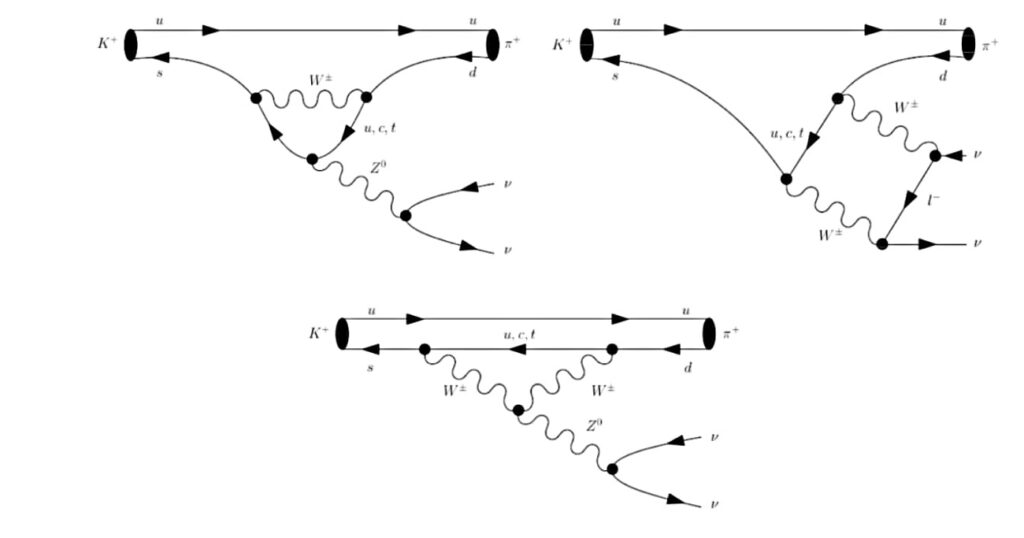
On September 23rd 2019, the NA62 experiment at CERN announced the measurement of other two K+ â†’ Ï€+ Î½ ν decays after the first one announced back in 2018 (NA62 sees hints of rare kaon decay).

These measurements are useful to shine light on dark matter, as hints of new physics beyond standard model can hide in rare decays as the charged kaon (K+) been investigated by NA62. The Standard Model predicts a very small fraction of K+ to decay into a positively charged pion and a neutrino-antineutrino pair, therefore finding deviation on this well predicted branching ratio can point to new particles and perhaps discover more about the nature of dark matter.

So far NA62 has measured three of these decays in the dataset collected in 2016 and 2017, even if they seem few the physicists were already able to measure the K+ â†’ Ï€+ Î½ ν branching ration with unprecedented precision and put more stringent limit on new physics.

NA62 logo

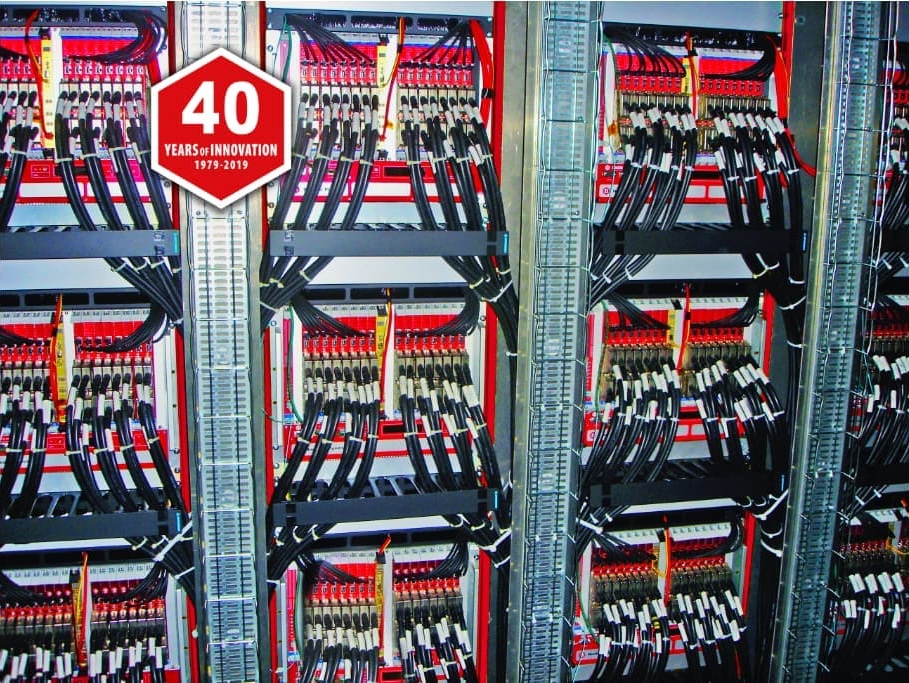
CAEN has contributed to NA62 in many different ways from the very first phases with dedicated R&D and various other products, including power supplies (PMT PS system for NA62) and data acquisition system for the Liquid Krypton Calorimeter (CREAM).

NA62 spots two potential instances of rare particle decay gallery media
Figure 1.1 – Calorimeter REAdout Modules (CREAM) for the NA62 high resolution Liquid Krypton Calorimeter (LKr);
NA62 spots two potential instances of rare particle decay gallery media
Figure 1.2 – The penguin and box diagrams contributing to K+ → π+νν. For KL → π0νν the spectator quark is changed from u to d.;

Filed Under: Senza categoria

CAEN Educational for young researchers @ European Space Agency

19/07/2019 by CAEN

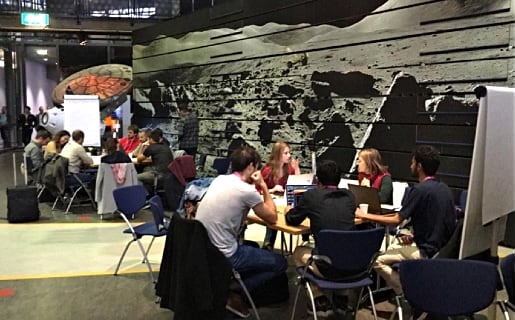
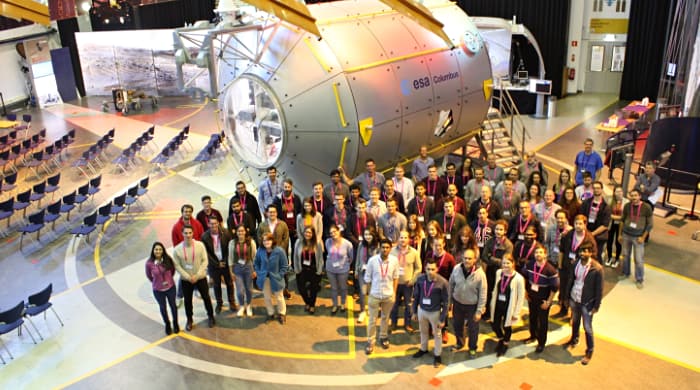
The EIROforum School on Instrumentation (ESI) is a biennial event, jointly organized by the Instrumentation Working Group of the EIROforum organizations. The objective of ESI is to teach the basic principles of instrumentation to young researchers (PhD students, postdocs) and engineers from the EIRO organizations, companies, and institutes from Europe and beyond.
The sixth school (ESI 2019) took place from 13-17 May 2019 at ESA/ESTEC in Noordwijk, The Netherlands.

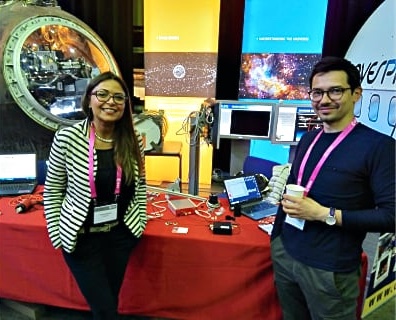
ESI event's photo
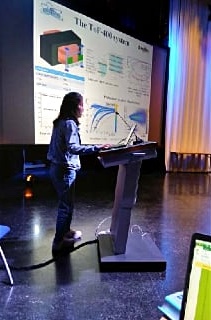
ESI event's photo
ESI event's photo
CAEN Educational for young researchers @ European Space Agency preview image

In summary

  • 73 young professionals coming from all over Europe attended the school.
  • They contributed to the school scientific programme with posters and flash presentations of 2 minutes.
  • The school core programme comprised more than 25 talks on Particle Physics, Nuclear Fusion, X-ray Free-electron Laser, Synchrotron Radiation, Molecular Biology, Space and Astronomy instrumentations.
  • More than 20 lecturers coming from the EIROforum organizations contributed to this scientific programme.
  • The school highlight was an afternoon dedicated to Artificial Intelligence with ESA and CERN contributions including hands-on exercises, jointly organized with IT EIROforum working group.
  • The last day was a full project day during which teams collaborated and learned about technology transfer, jointly organized with Innovation Management and Knowledge / Technology Transfer (IMKTT) working group.

ESI2019 has been financially supported by 5 industrial sponsors and instrumentation leaders: CAEN, DECTRIS, Kuraray, HAMAMATSU and Teledyne-e2v.

The detailed programme (including lectures’ title and lecturers) together with the presentations are available online at this link: https://indico.cern.ch/event/777129/timetable/#20190513.detailed

More info about the event: https://www.eiroforum.org/event/6th-eiroforum-school-on-instrumentation/

CAEN Educational Kit available here

Filed Under: Senza categoria

MICADO, European Project for The Monitoring of Radioactive Waste, Kicks Off

06/06/2019 by CAEN

Standardize the management of radioactive waste, starting from their non-destructive characterization to transport, storage and real-time monitoring. This is the objective of the MICADO Project (Measurement and Instrumentation for Cleaning and Decommissioning Operations), started on June 3, thanks to Euratom funding, and to the synergy between 8 European partners with solid experience in the field of radioactive waste, nuclear techniques, electronics and information technology.

CAEN is the coordinator of the project and will contribute with more than 40 years of experience in the field of nuclear electronics and a growing presence in the market of complete measurement systems, it will be joined by other to renowned Italian research institutions INFN and ENEA, which have specific expertise on radiation detection and techniques for radioactive material management. The international partners are ORANO and CEA for France, a large company leader in the nuclear energy sector and a public institution which has lead the field of nuclear research in France for years, SCK-CEN for Belgium and CTU for the Czech Republic are two other research institutes whit a solid expertise in nuclear management and algorithm development, finally XIE for Germany that is another SME with experience in X-ray detection.

MICADO provides a complete digitalization process that will facilitate and harmonize all the methods used in the field for waste management as well as for the dismantling and decommissioning (D&D) of nuclear plants. To date, in fact, there is no single, consistent and linear solution to characterize various types of radioactive materials, just as there is no integrated solution for digitizing the enormous amount of data produced. The Digi-Waste RCMS solution proposed in the MICADO project will produce a modular hardware and software system to unify and standardize procedures and methods for non-destructive characterization and monitoring of nuclear waste, proposing itself as an international reference for all nuclear operators, research laboratories and the security authorities, facilitating the exchange of fundamental and often critical information.

MICADO preview page

Website: www.micado-project.eu

This project has received funding from the European Union’s Horizon 2020 innovation action programme under grant agreement No 847641. This text reflects only the author’s views and the Commission is not liable for any use that may be made of the information contained therein.

Starting date: June 2019
Ending date: May 2022

The MICADO consortium consists of 8 partners from 5 European countries counting Research Institutes, SMEs and Large companies. The project is expected to last 36 months with a budget of EUR 5 million (EU contribution: EUR 4.5 million).

MICADO Consortium Members

CAEN Logo 2011
Caen SpA, Italy
CEA Logo
CEA, France
Cvut logo
CTU, Czech Republic
Enea logo
ENEA, Italy
INFN logo
INFN, Italy
Orano logo
Orano, France
Sogin logo
Sogin, Italy
Sck-cen Logo
SCK-CEN, Belgium
XIE logo
XIE, Germany

Filed Under: Senza categoria

Rarest decay process ever measured – XENON1T experiment

17/05/2019 by CAEN

XENON1T experiment observed the rarest decay process ever measured; this detector that was designed to probe dark matter, the ‘missing’ mass in the Universe, has seen an elusive nuclear decay called two-neutrino double electron capture — with implications for nuclear and particle physics.

Read the full article on nature.com

What is XENON1T Experiment

XENON experiment is a 3500kg liquid xenon detector to search for the elusive Dark Matter – construction of the next phase, XENON1T, started in Hall B of the Gran Sasso National Laboratory in 2014. The detector contains 3.5 tons of ultra radio-pure liquid Xenon, and has a fiducial volume of about 2 tons. The detector is housed in a 10 m water tank that serves as a muon veto. The TPC is 1 m in diameter and 1 m in height. The predicted sensitivity at 50 GeV/c2 is 2.0×10−47 cm2. This is 100x lower than the current limit published for XENON100.

DAQ by CAEN

CAEN V1724 fADCs with 100 MHz sampling frequency and 40 MHz input bandwidth were used in XENON100 and used again in XENON1T but in this later stage the system has been upgraded to handle a larger amount of data. This lead to a rather short development time since old systems and software (also for data storage and data processing) can be largely re-used.
In XENON100 the maximum DAQ rate was increased by more than one order of magnitude compared to XENON10 – although the drift length was doubled and the number of channels increased by a factor 2.7 – by using an online data reduction technique. This FPGA based method is basically rejecting all baseline between peaks and reduces the amount of data to be transferred and stored dramatically.
Currently, the factor limiting the DAQ rate is the overall data throughput for the full DAQ line, starting from the VME bus to the transfer to the computer cluster above ground. This problem can be easily solved by parallelizing the DAQ system.

XENON1T experiment preview image
A wide view of XENON1T Experiment
XENON1T experiment media
A wide view of the DAQ room

What is XENON1T Experiment

XENON experiment is a 3500kg liquid xenon detector to search for the elusive Dark Matter – construction of the next phase, XENON1T, started in Hall B of the Gran Sasso National Laboratory in 2014. The detector contains 3.5 tons of ultra radio-pure liquid Xenon, and has a fiducial volume of about 2 tons. The detector is housed in a 10 m water tank that serves as a muon veto. The TPC is 1 m in diameter and 1 m in height. The predicted sensitivity at 50 GeV/c2 is 2.0×10−47 cm2. This is 100x lower than the current limit published for XENON100.

DAQ by CAEN

CAEN V1724 fADCs with 100 MHz sampling frequency and 40 MHz input bandwidth were used in XENON100 and used again in XENON1T but in this later stage the system has been upgraded to handle a larger amount of data. This lead to a rather short development time since old systems and software (also for data storage and data processing) can be largely re-used.
In XENON100 the maximum DAQ rate was increased by more than one order of magnitude compared to XENON10 – although the drift length was doubled and the number of channels increased by a factor 2.7 – by using an online data reduction technique. This FPGA based method is basically rejecting all baseline between peaks and reduces the amount of data to be transferred and stored dramatically.
Currently, the factor limiting the DAQ rate is the overall data throughput for the full DAQ line, starting from the VME bus to the transfer to the computer cluster above ground. This problem can be easily solved by parallelizing the DAQ system.

Filed Under: Senza categoria

  • « Go to Previous Page
  • Page 1
  • Interim pages omitted …
  • Page 4
  • Page 5
  • Page 6
  • Page 7
  • Page 8
  • Page 9
  • Go to Next Page »

Footer

CAEN S.p.A.

PI 00864500467 | REA: LU 102690

C.I.V.: 500.500€ | CDU A47Ø7H7

IMQ Certification
Cyber Essentials Plus

About Us

  • Company Profile
  • Our policy
  • Sales network
  • Innovative Projects
  • Careers
  • How to reach us

Resources

  • Documentation
  • Accessibility Statement

Applications

  • High Energy Physics
  • Astrophysics
  • Neutrino Physics
  • Dark Matter Investigation
  • Nuclear Physics
  • Material Science
  • Medical Applications
  • Homeland Security

Support

  • Getting Started with MyCAEN Portal
  • CAEN LHC Commitment

News

  • News

Contact Us

  • Contact

Login

    
  • Privacy Policy
  • Cookie Policy

Copyright © 2026 CAEN S.p.A. All rights reserved. Website by Addiction

✕