

• Skip to main content
  • Skip to footer
CAEN logo light
  • About
    • Company Profile
    • Our policy
    • Sales network
    • Innovative Projects
    • Careers
    • How to reach us
  • Products
  • Resources
    • Documentation
    • Download
    • FAQ
    • Glossary
    • Certifications
    • General Conditions
  • Support
  • Contact
All productsForm FactorPower SupplyModular Pulse ProcessingDigitizer FamiliesDigital SpectroscopyCAEN SyS productsEducationalFirmware & SoftwarePowered CratesAccessoriesBrands

There is a little bit of CAEN, Italy in the picture of the century

News

Home Senza categoria Page 7

Company logo

Senza categoria

There is a little bit of CAEN, Italy in the picture of the century

11/04/2019 by CAEN

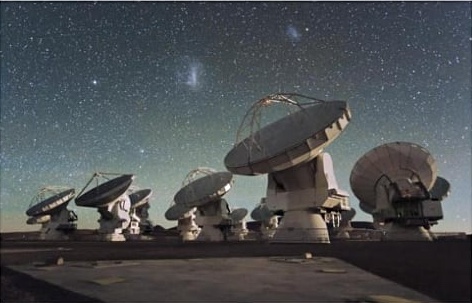
There is a little bit of CAEN, Italy in the picture of the century. CAEN in fact designed and supplied 83 customized power supplies for the ALMA telescope (Atacama Large Millimeter/submillimeter Array).

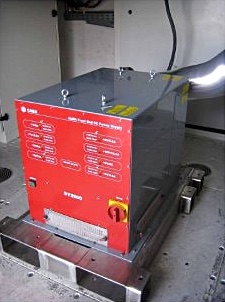
ALMA is a single instrument, composed initially of 66 high-precision antennas, in the Atacama Desert of northern Chile, 5000 metres above sea level. The array has been constructed on Chajnantor plateau at wavelengths of 0.3 to 9.6 mm. Its ’12 metre array’ will have fifty 12-m diameter antennas, acting together as a single telescope – an interferometer. The antenna Front-End data acquisition system, placed in the antenna’s base cabin, is powered with CAEN custom developed Low Voltage Power Supply unit. This PS unit make available 8 LV different voltages with extremely low ripple, remotely controllable.

Alma telescope
Alma telescope
Alma telescope

About ESO

ESO, the European Southern Observatory, is the foremost intergovernmental astronomy organisation in Europe. It is supported by 14 countries: Austria, Belgium, the Czech Republic, Denmark, France, Finland, Germany, Italy, the Netherlands, Portugal, Spain, Sweden, Switzerland and the United Kingdom. ESO carries out an ambitious programme focused on the design, construction and operation of powerful ground-based observing facilities enabling astronomers to make important scientific discoveries. ESO operates three unique world-class observing sites in the Atacama Desert region of Chile: La Silla, Paranal and Chajnantor.
ESO WEB site: http://www.eso.org/

About ALMA

The ALMA project is a partnership between Europe, Japan and North America in cooperation with the Republic of Chile. ALMA is funded in Europe by ESO, in Japan by the National Institutes of Natural Sciences in cooperation with the Academia Sinica in Taiwan and in North America by the U.S. National Science Foundation in cooperation with the National Research Council of Canada
ESO ALMA Project Web site: http://www.eso.org/sci/facilities/alma/index.html
ALMA web site: http://www.almaobservatory.org/

Filed Under: Senza categoria

CAEN presents PRIMIS and NEOLITE projects at ToscanaTech2018

18/12/2018 by CAEN

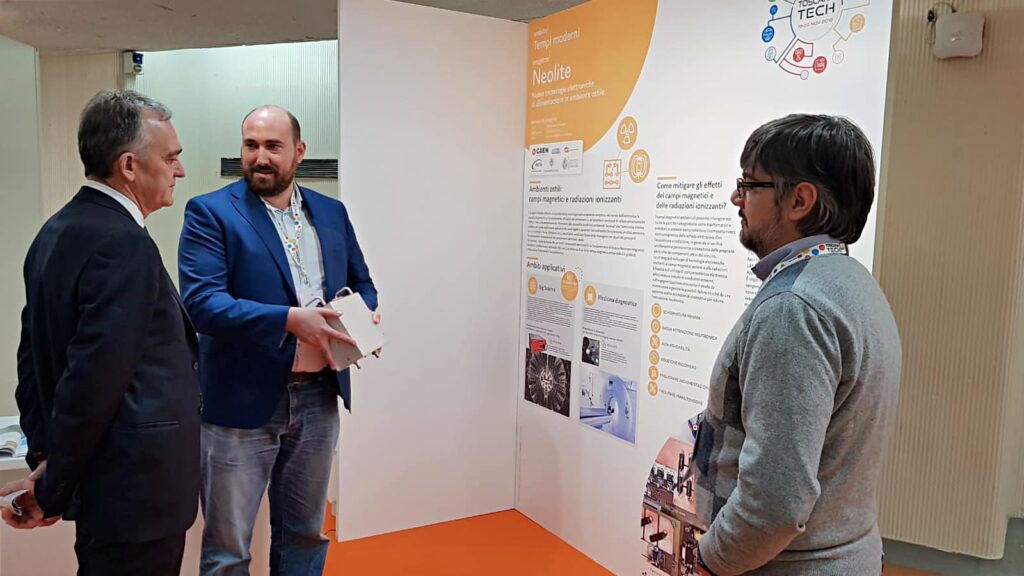
CAEN has presented the results of the completed NEOLITE project and the ongoing PRIMIS project at the ToscanaTech2018 event, organized by Regione Toscana in Florence last 19/20 November.

The event was focused on Industry4.0 and more in general on innovation in Tuscany, CAEN since it foundation has always been on the forefront of innovative R&D thanks to collaborations with research institutes and universities, also thanks to projects publicly funded as PRIMIS and NEOLITE by Regione Toscana.

Filed Under: Senza categoria

CAEN still paves the way forward at CERN

05/11/2018 by CAEN

CAEN EASY BRIC1 passed the technical review imposed by the ATLAS collaboration to participate at the tender to power the New Small Wheel detector.

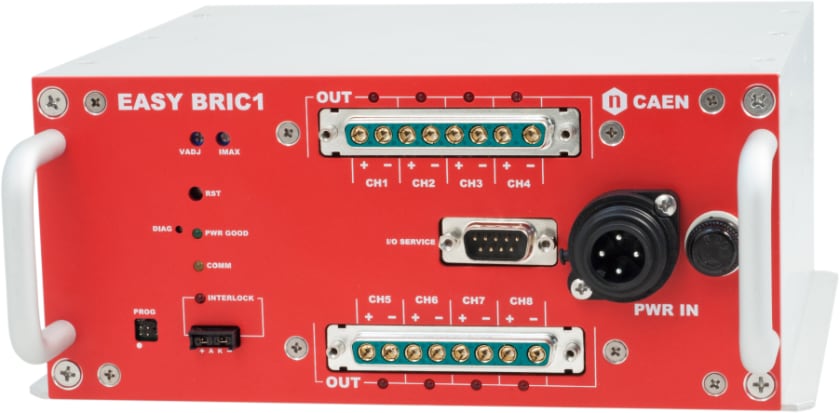
CAEN proudly announces that its new EASY BRIC1 qualified, after the technical review by the ATLAS collaboration, to participate at the tender for the New Small Wheel detector power supplies in hostile area. After a careful test campaign conducted at CERN our newborn of the EASY family, a high-power DC-DC converter called BRIC1 (B and Rad tolerant Intermediate Converted), has been validated to operate in the harsh condition of the ATLAS experimental cavern. This represents for CAEN a huge success of an R&D program that has started in 2016 and will continue in the next years to produce the next generation of power supplies for high energy physics.

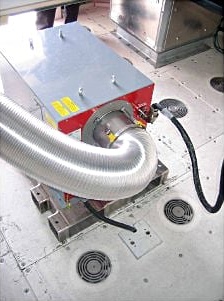
CAEN EASY BRIC1 image
CERN preview image
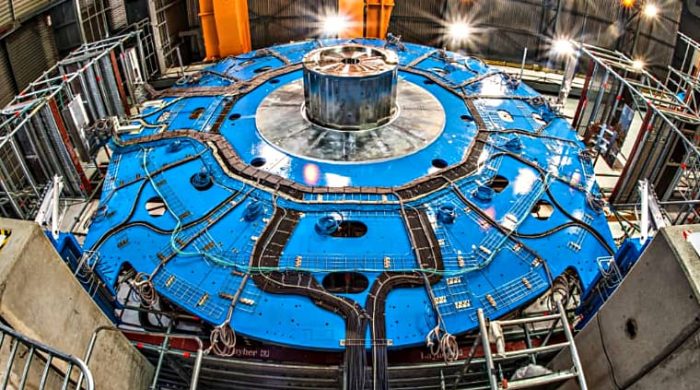
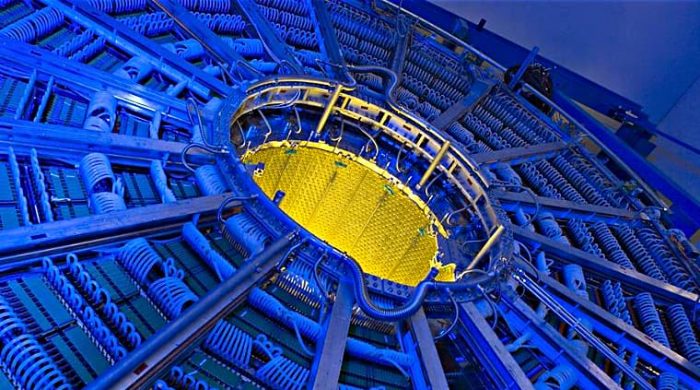
ATLAS New Small Wheel (NSW) mechanical structure. (Image: © CERN)

CAEN first developed the EASY (Embedded Assembly SYstem) in the late ’90 and it soon became a reference for the physicists at CERN thanks to its scalability and flexibility, qualities firmly needed when building the large LHC experiments. The name BRIC1 has been intentionally chosen to resemble the word “brick” to signify CAEN resolution to build a new system of power supplies, starting from technologies implemented in this first piece and all the experience gathered during the 20 years of LHC operations, and eventually set a new benchmark for the physicist as the EASY was in the early stages of the LHC.

The New Small Wheel (NSW) detector is a gas detector meant to reconstruct muons in the forward area of the ATLAS experiment at LHC. It is one of the first major upgrades to be installed for ATLAS and it will help the experiment to enhance its performance in muon identification and measurement in view of the next years of data taking, with higher and higher instantaneous luminosities.

For more information about ATLAS experiment https://atlas.cern/

For more information about CAEN EASY BRIC1 click here

Filed Under: Senza categoria

Training Course for ERASMUS Mundus Program

24/08/2018 by CAEN

Thanks to ERASMUS Mundus Program partnership for the 2018 NuPhys ERASMUS Nuclear Physics Master, CAEN is glad to announce the successful conclusion of the “CAEN Digitizers, SiPM and EasyPET Acquisition Systems Training Course”. Five students from three different countries attended the course which was structured in interactive lectures and practical sessions.

Sincere thanks were addressed by PhD Chidera Opara, Students Representative Member in the ERASMUS Academic Committee, to CAEN:

“On behalf of the students of Erasmus Mundus Joint master in Nuclear Physics, I use this avenue to express our profound gratitude to the president of CAEN SpA, and CAEN SyS and other staff for giving us a wonderful welcoming atmosphere during the summer school. Thank you for the selfless effort and time you invested during the school.
To mention but a few, the lectures were all well structured and organised in its proper manner. Moreover, it was not only mere lectures, but the lectures tailored down interactively, which integrated the maximum participation of each and everyone of us. The practical sections, and the proposed real-life problems were excellent in general, which served as a conduit for critical thinking and strategy.
Overall, the summer school in CAEN company was fantabulous, and we say a very big thank you, for making valuable knowledge-wise contributions to our lives, and giving us such a very cordial platform.”

For more information http://master.us.es/nuphysjmd/

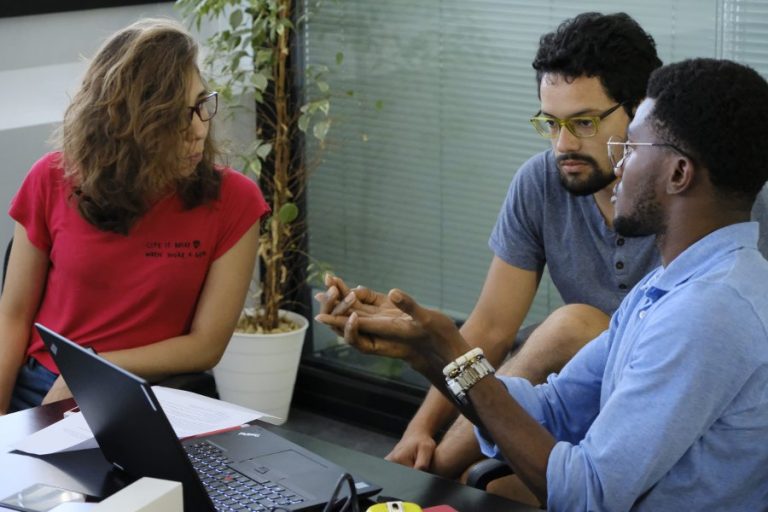
Image of the Training Course for ERASMUS Mundus Program

Filed Under: Senza categoria

CAEN has been selected by ALICE collaboration to provide the high voltage system for the quadruple GEM chambers of the new TPC detector

06/06/2018 by CAEN

CAEN will deliver a newborn version of the A1515 board for the experiment, called the A1515QGA with the same great features of the other members of the A1515 family but specifically customized for the experimental needs. This family has been precisely designed to tackle the challenges posed by new Micro Pattern Gas Detectors (MPGD), which are a powerful solution for particle detection in high rate conditions. Extensive tests were performed with the support of CERN RD51 lab.

ALICE choice makes the A1515 family the most popular board for GEM detectors at CERN, powering the future muon detectors of CMS and ALICE. Worldwide the A1515 boards bias the GEM detectors of the KLOE and BESIII experiments at the Frascati National Laboratory in Italy and at the Beijing Electron-Positron Collider II in China respectively, thus confirming CAEN as the favorite choice among physicists to power the new generation of MPGD.

ALICE (A Large Ion Collider Experiment) is one of the four main experiment at the large hadron collider (LHC), it is purposely built to study heavy ion collision and the resulting quark gluon plasma, an extreme phase of matter present for the first few millionths of a second after the Big Bang. The properties of such a phase are key issues for Quantum Chromo Dynamics, the understanding of confinement-deconfinement and chiral phase transitions. For this purpose, ALICE is designed to carry out a comprehensive study of the hadrons, electrons, muons and photon which diverse sub-detectors, one of which is the so called Time Projection Chamber (TPC) which is being upgraded for high luminosity LHC (HL-LHC) to a new gas electron multiplier (GEM) system.

For more information about ALICE experiment please visit http://aliceinfo.cern.ch/Public/Welcome.html

For more information about CAEN A1515 family please visit https://www.caen.it/products/a1515/

ALICE CERN
CAEN has been selected by ALICE collaboration to provide the high voltage system for the quadruple GEM chambers of the new TPC detector

Filed Under: Senza categoria

Beamline for schools: studenti vincitori realizzano esperimento al Tifpa di Trento

05/03/2018 by CAEN

Sono in partenza per Trento sei studenti della classe 4^C dell’Istituto d’Istruzione Superiore “Nicola Pellati” di Nizza Monferrato (Asti), vincitori della selezione tutta italiana, targata Istituto Nazionale di Fisica Nucleare (INFN), della competizione del CERN “Beamline for Schools” (BL4S). Venerdì 23 e sabato 24 febbraio gli studenti piemontesi saranno al centro trentino di protonterapia dell’Azienda Provinciale Servizi Sanitari (APSS). Nel centro, dove vengono trattati pazienti oncologici con protoni, gli studenti lavoreranno nella sala sperimentale del TIFPA (Trento Institute for Fundamental Physics and Applications, il centro INFN di Trento), dove avranno la possibilità di mettere in pratica l’esperimento che hanno progettato per il concorso internazionale BL4S.

Gli studenti creatori del progetto PROMETHEUS.

Il servizio presentato su RAI Tre, visionabile anche al seguente link. Il loro esperimento consiste in un’inedita misura del cosiddetto “picco di Bragg”, che identifica il punto di massima deposizione di energia in un trattamento di radioterapia oncologico con fasci di protoni. I protoni prodotti da un acceleratore hanno la proprietà di danneggiare i tessuti umani in maniera più limitata rispetto alla tradizionale radioterapia a raggi gamma: la loro capacità di distruggere cellule è inizialmente piccola, mentre la particella attraversa il tessuto, ma cresce bruscamente nel piccolo tratto finale del loro percorso nei tessuti, punto che prende il nome di “picco di Bragg”. Un’accurata caratterizzazione della posizione di questo picco è condizione necessaria per colpire il tumore e non il tessuto sano che lo circonda, rendendo possibile la cura del tumore. L’esperimento ideato dai ragazzi di Asti si compone di una parte puramente sperimentale che coinvolge la realizzazione del rivelatore, resa possibile grazie alla CAEN, che ha fornito gratuitamente agli studenti delle apparecchiature elettroniche necessarie alla misura, e grazie all’interessamento di alcuni ricercatori dell’Università degli Studi dell’Insubria, co-progettisti di queste stesse apparecchiature. Gran parte dei test durante questa fase si sono svolti nei laboratori di Como dell’Università dell’Insubria. Vi è poi la parte di irraggiamento e analisi dati e validazione delle simulazioni, che verrà messa in pratica al TIFPA venerdì e sabato prossimi. La costruzione del rivelatore e lo sviluppo delle simulazioni è avvenuto nel contesto dell’Alternanza Scuola-Lavoro. Ogni studente ha utilizzato i suoi interessi specifici nei diversi ambiti coinvolti nell’esperimento, dallo studio biomedico sulle applicazioni del picco di Bragg alla realizzazione dell’hardware e del software. A partire da venerdì alle ore 16, i giovani verranno premiati per i loro sforzi progettuali potendo installare e utilizzare il loro apparato nella sala dedicata agli esperimenti dell’acceleratore del TIFPA. Lo studio dei ragazzi potrebbe trovare molteplici applicazioni in campo tecnologico e biomedico, in particolare per migliorare la precisione dei trattamenti radioterapici pediatrici, dove la precisione gioca un ruolo fondamentale.

“Il picco di Bragg è un fenomeno molto studiato e ben conosciuto dalla comunità scientifica”, commentano i ricercatori dell’INFN Dario Menasce (sezione di Milano Bicocca) e Nadia Pastrone (sezione di Torino) e Massimo Caccia dell’Università dell’Insubria, che hanno supportato i ragazzi durante la fase di costruzione del rivelatore. “I ragazzi hanno approcciato questa misura in maniera originale, usando i SiPM (fotomoltiplicatori al silicio), rivelatori modernissimi e ancora poco utilizzati, per caratterizzare con precisione il fenomeno e, nello stesso tempo, mostrare che un esercizio complesso come la misura a un fascio di protoni sia affrontabile con successo da ragazzi di liceo. Le prospettive di completa riuscita dell’esperimento, viste le prove effettuate in laboratorio, sono ottime, ma anche solo il fatto di aver saputo approntare tutte le complesse parti dell’esperimento costituirà un eccellente esempio di attività scientifica affrontata con serietà e professionalità”, concludono i ricercatori.

“L’esperimento proposto dagli studenti è stato accettato con grande entusiasmo dal Program Advisory Committee (PAC), non solo per il suo valore didattico, ma anche per quello scientifico”, ha dichiarato il Presidente del PAC Francesco Tommasino dell’Università di Trento e TIFPA. “La facility del TIFPA ha ospitato oltre 20 gruppi sperimentali nel 2017 per esperimenti in diversi settori, dalla fisica medica all’elettronica, ma questo è il primo esperimento didattico”. “Ho una grandissima passione per la fisica, sia perché è il massimo strumento di indagine della natura, sia perché è la madre di tutte le applicazioni tecnologiche” commenta Valerio Pagliarino, un ragazzo che con i suoi 16 anni si è già fatto notare in vari ambiti scientifici, vincendo ad esempio il primo premio del concorso 2016 per giovani ricercatori dell’Unione Europea.

“Il mio più grande sogno per il futuro è proprio quello di continuare su questa strada e per me questo esperimento sarà un’esperienza indimenticabile. La preparazione è durata circa un anno ed è stato veramente divertente e soddisfacente lavorare tutti insieme per questo obiettivo”, conclude Valerio. Aurora Robino, compagna di Valerio in questa avventura scientifica, commenta così l’esperienza dell’ultimo anno: “Ho preso parte a questo progetto perché mi sembrava un’ottima possibilità per mettere alla prova le mie capacità nell’ambito che più mi appassiona, cioè quello delle scienze naturali. All’interno della squadra mi sono occupata di studiare come le misure ‘acqua-equivalenti’ del picco di Bragg siano utili per la calibrazione della protonterapia. Durante l’esperimento il mio compito sarà quello di operare sul database che raccoglie tutte le operazioni che vengono effettuate. Quello che nel progetto mi è piaciuto di più è stato il lavoro di gruppo e la possibilità di poter approfondire in maniera più mirata la biologia nel campo della radioterapia oncologica”.

Che cos’è la competizione “Beamline for Schools”: Nata nel 2014, la competizione internazionale “Beamline for Schools” ? BL4S (“Una linea di fascio per le scuole”) offre agli studenti dei licei di tutto il mondo la possibilità di vincere un soggiorno al CERN e la possibilità di utilizzare un fascio di particelle di uno degli acceleratori per condurre l’esperimento da loro ideato. I vincitori (al massimo due squadre) vengono annunciati ogni anno a giugno e si recano al CERN a settembre. Da tre anni l’INFN ha deciso di premiare una squadra italiana (ove possibile) tra quelle partecipanti alla BL4S, offrendole la possibilità di condurre il proprio esperimento in uno dei laboratori italiani.

Per informazioni sulla competizione del CERN: http://beamline-for-schools.web.cern.ch/

Informazioni su CAEN S.p.A: La CAEN S.p.A. (www.caen.it), nata come spin-off dell’INFN alla fine degli anni ’70, si è dedicata negli ultimi dieci anni a progetti tecnologici per più importanti centri di ricerca del mondo, oltre allo sviluppo di elettronica per gli esperimenti dell’acceleratore LHC al CERN e si pone oggi come una delle più importanti realtà industriali nel settore della strumentazione elettronica per fisica nucleare e subnucleare. Cogliendo l’opportunità della recente introduzione della fisica moderna nei programmi della scuola secondaria superiore, CAEN ha sentito il bisogno di offrire la propria esperienza a vantaggio delle nuove generazioni, creando nuovi esperimenti e strumenti didattici adeguati al livello delle conoscenze disciplinari dei ragazzi, con l’obiettivo di mostrare come i processi fisici siano alla base del micro-macro cosmo della vita quotidiana e come il loro apprendimento sia fondamentale per acquisire capacità di analisi critica e comprensione dei fenomeni, elementi che contribuiscono alla crescita responsabile dei cittadini del terzo millennio.

Filed Under: Senza categoria

  • « Go to Previous Page
  • Page 1
  • Interim pages omitted …
  • Page 5
  • Page 6
  • Page 7
  • Page 8
  • Page 9
  • Go to Next Page »

Footer

CAEN S.p.A.

PI 00864500467 | REA: LU 102690

C.I.V.: 500.500€ | CDU A47Ø7H7

IMQ Certification
Cyber Essentials Plus

About Us

  • Company Profile
  • Our policy
  • Sales network
  • Innovative Projects
  • Careers
  • How to reach us

Resources

  • Documentation
  • Accessibility Statement

Applications

  • High Energy Physics
  • Astrophysics
  • Neutrino Physics
  • Dark Matter Investigation
  • Nuclear Physics
  • Material Science
  • Medical Applications
  • Homeland Security

Support

  • Getting Started with MyCAEN Portal
  • CAEN LHC Commitment

News

  • News

Contact Us

  • Contact

Login

    
  • Privacy Policy
  • Cookie Policy

Copyright © 2026 CAEN S.p.A. All rights reserved. Website by Addiction

✕