
FERS-5200 Concentrators
Front-End Readout System
Overview
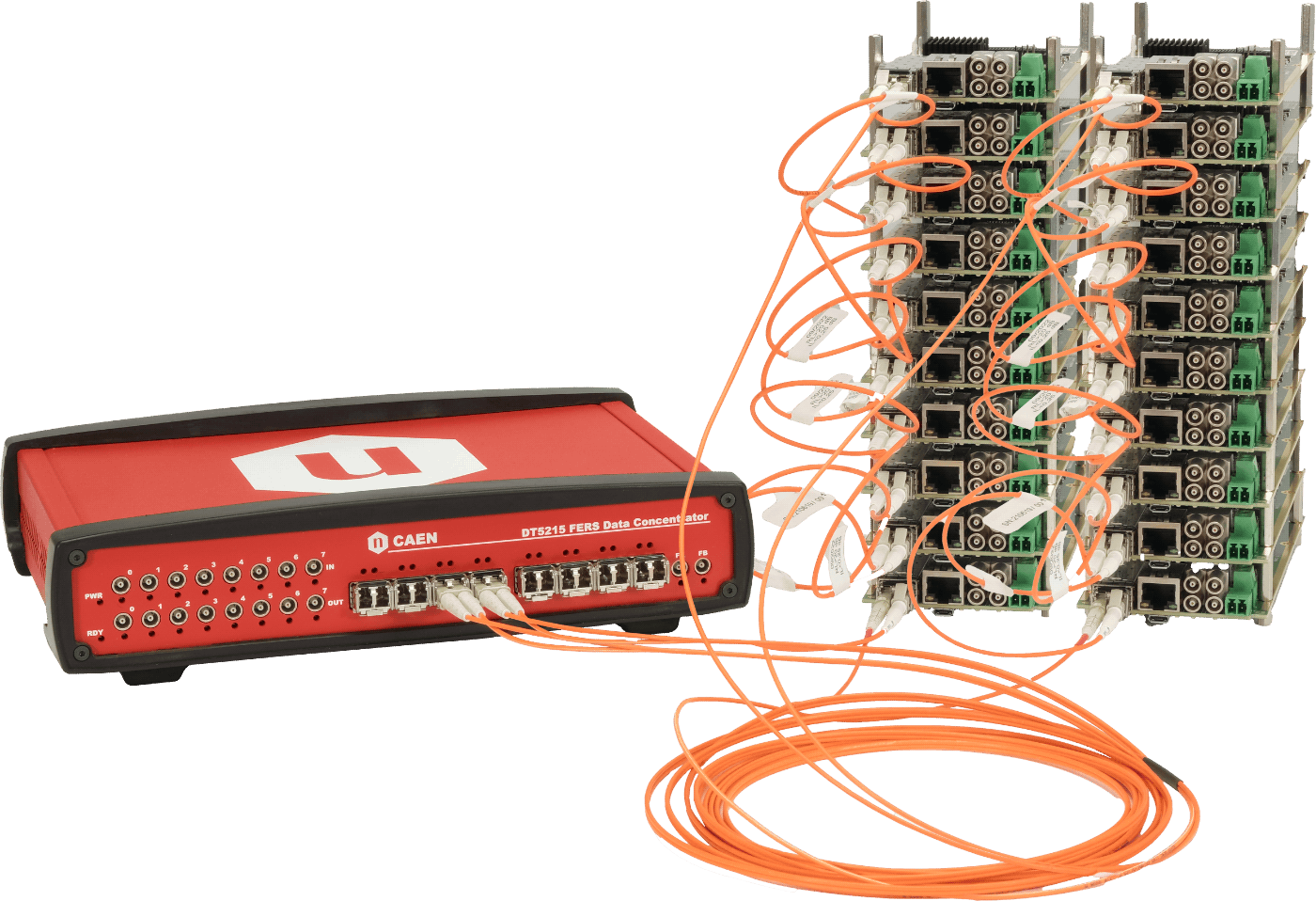
FERS Data Concentrators are dedicated collector boards designed to interface and aggregate data from multiple A520x front-end units, forming a distributed and easily scalable readout architecture. Each A520x board is a compact module featuring 32 or 64 readout channels with integrated Front-End electronics, A/D converters, trigger logic, synchronization, local memory, and data interface.
The FERS platform is flexible and modular: by maintaining a common readout and control infrastructure — including a unified user interface — different front-end designs can be developed to match a wide range of detector technologies. Most front-ends are based on ASIC chips, which allow for compact, low-power, and cost-effective multi-channel integration. ASICs may include analog signal chains (preamplifier, shaper, peak detector, discriminator), or fast Flash ADCs (1 GS/s or more) capable of waveform digitization and digital processing for timing, energy, and pulse shape extraction.
Each FERS unit can also operate in standalone mode, connected directly to a PC via USB 2.0 or 10/100T Ethernet. This configuration offers a convenient and affordable solution for ASIC evaluation. Once validated, the system can be scaled up to thousands of channels by connecting multiple FERS units into a tree topology, where the optical TDlink serves as the single physical connection handling data readout, slow control, and timing synchronization.
Two Concentrator models are available:
-
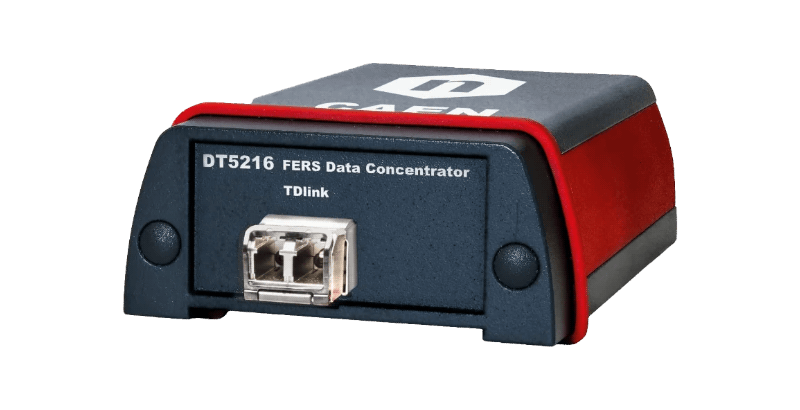
DT5216 – features 1 optical link, supporting up to 8 A520x units in daisy chain.
-
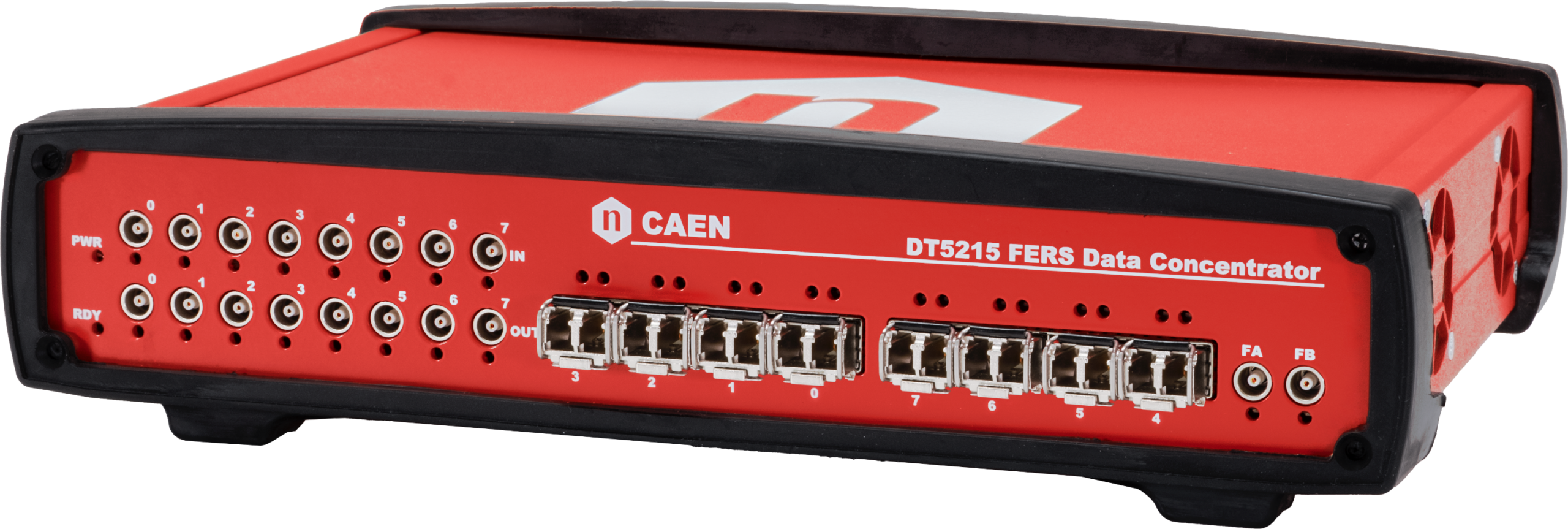
DT5215 – features 8 optical links, supporting up to 64 A520x units in total.
Each A520x board may host up to 128 channels, allowing a DT5215 to manage up to 8192 channels from a single board.
Both DT5215 and DT5216 integrate a Linux-based Single Board Computer that handles event building and data aggregation based on timestamp and/or trigger ID from each FERS unit. The resulting data packets are sorted, merged, temporarily stored in local memory, and then transmitted to the host computer. DT5215 offers both 1 Gb Ethernet and USB 3.0 connectivity (10 GbE Coming Soon), while DT5216 is equipped with a USB 3.0 interface only.
Users can also deploy custom data processing or reduction algorithms directly onto the embedded CPU for enhanced flexibility.
Highlights
-
Centralized readout for the FERS-5200 platform — a scalable system for reading out large detector arrays (SiPMs, MA-PMTs, Gas Tubes, Silicon Detectors, and more).
-
Flexible front-end options: a family of FERS units tailored for different detector types, based on ASICs for analog or digitized signal processing.
-
Scalable and modular: from a single FERS unit for prototyping to thousands of channels distributed over large detector systems — all managed by one Concentrator board.
-
Single-link synchronization: the optical TDlink ensures high-throughput data readout, slow control, and precise timing over a single connection.
-
Supports up to 8192 readout channels via daisy-chained FERS units.
FERS-5200 Concentrators Models
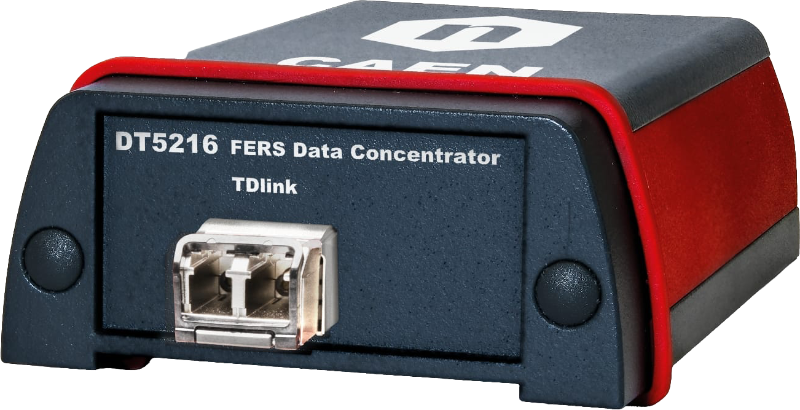
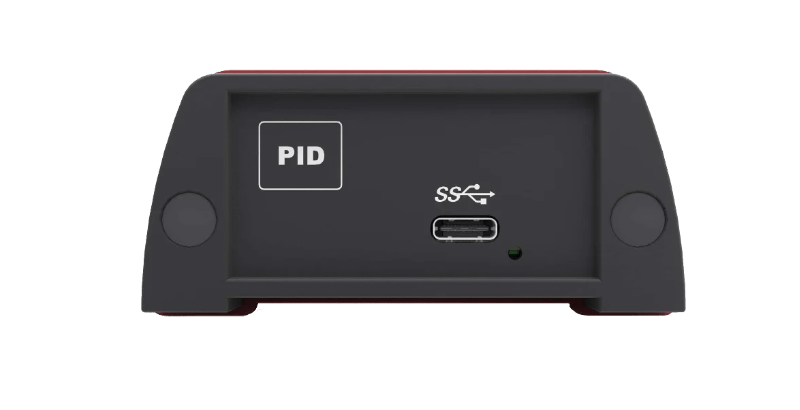
DT5216
A compact FERS-5200 concentrator featuring 1 optical TDlink port, capable of managing up to 8 A520x front-end units in daisy chain.
Embedded Linux SBC handles event building, data sorting, local buffering, and hosts communication via USB 3.0—ideal for mid-scale detector arrays with streamlined and efficient readout.
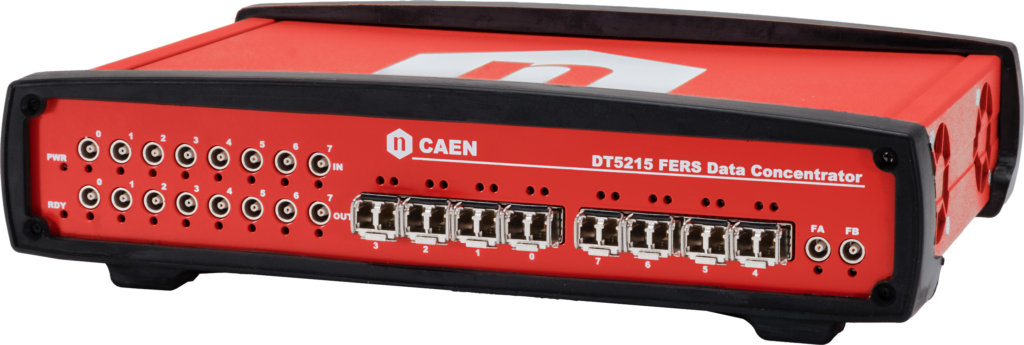
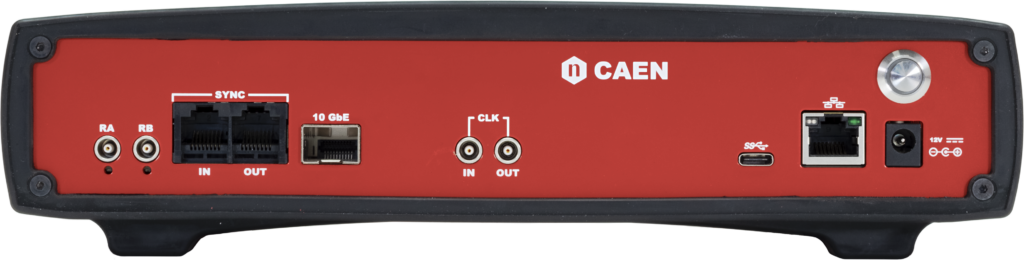
DT5215
A high-throughput FERS-5200 concentrator with 8 optical TDlink ports, supporting up to 128 A520x units (≈8192 channels).
Embedded Linux SBC enables aggregated event building, data merging, local buffering, and multi-host transfer via 1 Gb/10 Gb Ethernet and USB 3.0
Footer